 Langston Hughes (born Feb. 1, 1902): "A pioneer of modern black literature, Langston Hughes devoted his lengthy and diverse writing career to revealing the attitudes, experiences, and language of everyday black Americans. Famous for such acclaimed poems as "The Negro Speaks of Rivers" and "Harlem," Hughes was also the author of the much-admired Jesse B. Semple stories, as well as plays, song lyrics, children's books, essays, a novel, and two autobiographies. Dubbed the "Negro Poet Laureate" and the "Poet Laureate of Harlem," he focused on the lives of urban blacks and was especially known for his sardonic and witty depictions of racism in the United States. Hughes rose to prominence during the Harlem Renaissance of the 1920s and was one of the first black writers to infuse his work with colloquial language as well as the structures and rhythms of blues and jazz music." From Contemporary Black Biography. Read the full piece here.
 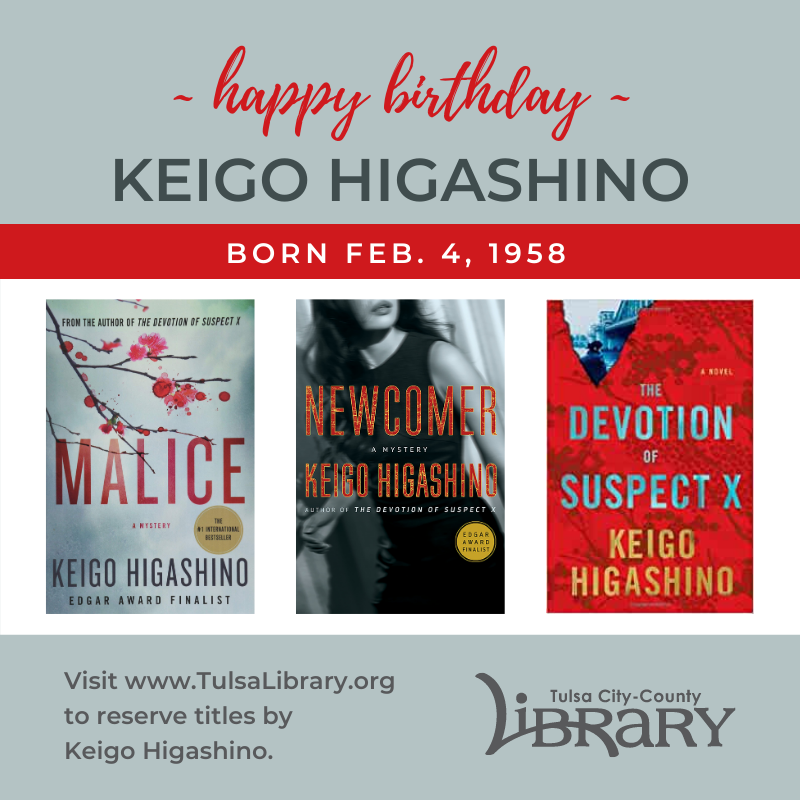 Keigo Higashino (born Feb. 4, 1958): "Keigo Higashino is 'Japan's Stephen King,' as Houston Chronicle reviewer P.G. Koch noted. The author of more than a score of thriller and crime titles, Higashino has several novels translated into English. His 1998 award-winning novel Himitsu was translated in 2004 as Naoko: A Novel, and his 2006 award winner Yogisha X no kenshin was published in 2011 as The Devotion of Suspect X. That novel's protagonist, Detective Galileo, is reprised in Salvation of a Saint, from 2012." From Gale Literature: Contemporary Authors. Read the full piece here.
  Alice Walker (Born Feb. 9, 1944): "Recognized as one of the leading voices among black American women writers, Alice Walker has produced an acclaimed and varied body of work, including poetry, novels, short stories, essays, and criticism. Her writings portray the struggle of black people throughout history, and are praised for their insightful and riveting portraits of black life, in particular the experiences of black women in a sexist and racist society. Her most famous work, the award-winning and best-selling novel The Color Purple, chronicles the life of a poor and abused southern black woman who eventually triumphs over oppression through affirming female relationships." From Contemporary Black Biography. Read the full piece here.
  Matt de la Peña: "In everything I've ever written--even the stupid poems I used to write in high school to try and get girls--elements of racism and racial identity and racial consciousness color the world," remarked author Matt de la Peña in an interview with Amy Bowllan for Bowllan's Blog. De la Peña is the author of several novels for young adults, works that feature the lives of kids, often minorities or outcasts, from the archetypal "other side of the tracks." De la Peña does not chart the course of middle-class high schoolers coming of age; instead he looks at a seventeen-year-old with a troubling background who finds solace on the basketball court in his debut novel, Ball Don't Lie, at the confusion of being bi-racial in Mexican White Boy, and at the lives of three homeless, teenage runaways in We Were Here." From Authors and Artists for Young Adults. Read the full piece here.
  Audre Lorde (born Feb 18, 1934): "'In the cause of silence,' Audre Lorde writes in The Cancer Journals, 'each one of us draws the face of her own fear--fear of contempt, of censure, or some judgment, or recognition, of challenge, of annihilation.' Yet her written work as a black lesbian feminist poet activist--a list like the ones that Lorde herself was fond of using to emphasize each aspect of her identity--constantly campaigns against the cause of silence. Indeed, for two decades Lorde raised her voice through essays, autobiography, and poetry in order to speak out about everything from motherhood to lesbianism to breast cancer." From Feminist Writers. Read the full piece here.
  Amy Tan (born Feb. 19, 1952): "Amy Tan's novels concerning the bonds between Chinese-American mothers and daughters have earned her a worldwide audience. Although immersed in the rich lore of Chinese myth and history, Tan's works transcend the particular and become testaments to the universal themes of love and forgiveness. Tan introduces characters who are ambivalent, as she once was, about their Chinese background, but who move to a deeper understanding of themselves as they confront their ancestors' struggles in China and America." From Gale Literature: Contemporary Authors. Read the full piece here.
  W.E.B. Du Bois (born Feb. 23, 1868): "From the late 1890s through the 1940s, W. E. B. Du Bois was one of the leading black intellectuals and the foremost champion of equal rights for blacks in the United States. At a time when many black Americans sought to improve their status by adapting to the ideals of white society and tolerating discrimination and segregation, Du Bois was a tireless proponent of unconditional equal and civil rights for all blacks. As a social scientist, he was also a pioneer in documenting historical and social truths about blacks in the United States. In eloquent and forceful writings in a variety of genres, he was the first to write of a distinct black consciousness, which he described as the peculiar "two-ness" of being both a black and an American. Du Bois's legacy has served as the intellectual foundation of the modern-day black protest movement." From Contemporary Black Biography. Read the full piece here.
 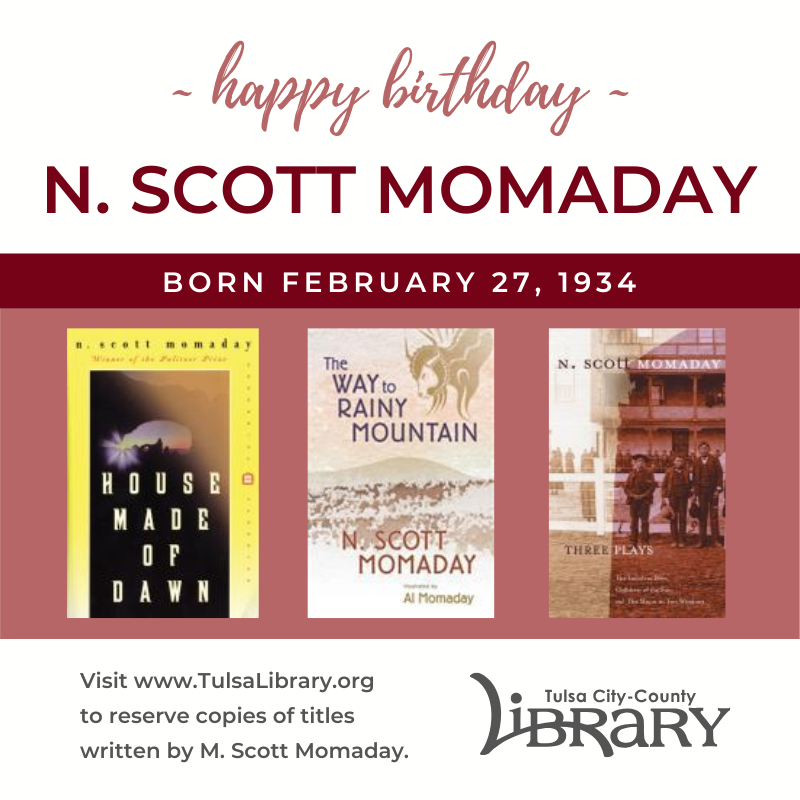 N. Scott Momaday (born Feb. 27, 1934): "N. Scott Momaday's poetry and prose reflect his Kiowa Indian heritage in structure and theme, as well as in subject matter. 'When I was growing up on the reservations of the Southwest,' he told Joseph Bruchac in the American Poetry Review, 'I saw people who were deeply involved in their traditional life, in the memories of their blood. They had, as far as I could see, a certain strength and beauty that I find missing in the modern world at large. I like to celebrate that involvement in my writing.'" From Gale Literature: Contemporary Authors. Read the full piece here.